What I do
When I work with you I take a holistic approach to infant feeding and tongue-tie assessment, taking into account as many of the factors influencing feeding as possible.
I have a specific interest in the effects of birth trauma on infant feeding and have helped thousands of infants with feeding difficulties over the years.
Infant feeding assessment and support, tongue-tie division and cranial osteopathy are all valuable tools that I use to help parents achieve their goals.
To book please go to https://calmbaby.janeapp.co.uk
NOTE: Although I have a lot of experience and training in carrying out this minor surgical procedure on infants, I do not currently perform Frenulotomy as my CQC Registration has lapsed. I am at the early stages of reapplying to the CQC but it is a long and arduous process. Please be patient as carrying on a regulated activity without being registered is an offence and fines are large. It is an offence under the Health and Social Care Act 2008 to carry out a regulated activity – in this case, providing the activity of surgical procedures - without being registered with CQC (Care Quality Commission).
The regulated activities are detailed in Schedule 1 of the Health and Social Care Act 2008 (Regulated Activities) Regulations 2014.
-

Bottle and breastfeeding support
We offer appropriate guidance and support, empowering you with the knowledge and confidence required to effectively feed your baby.
The early days and weeks after having a baby often differ from people's expectations of this post-natal phase. Many suffer in silence and if you are having feeding challenges you are not alone in that - it is a common although infrequently expressed experience.
The number of appointments needed varies according to the complexity of the case. Each mother and baby is assessed and treated on an individual case-by-case basis This is what the Care Quality Commission means by “person-centred care”.
Expect to receive respectful care at all times and to be listened to attentively.
Do reach out for help if you are struggling with any aspect of infant feeding. You deserve help and support. -
Tongue-tie assessment and division
I use a number of diagnostic tools to help establish if baby has an organised, efficient suck and swallow pattern, and whether they’re using their lips and tongue to form an effective seal on the breast or bottle.
Sometimes feeding may be disorganised for another reason, so we consider that possibility. Alongside taking a full history. observing your baby taking some of their feed can also be a really helpful part of the picture.
Before making any diagnosis other causes of infant feeding problems must be excluded. These include poor position and attachment and biomechanical factors (tensions in muscles or connective tissues that restrict or affect tongue movements or function).
What is important is not just the appearance of the frenulum but how the tongue is working - how it functions and moves.
Learn more about tongue-tie assessment, the procedure and aftercare. -
Cranial osteopathy
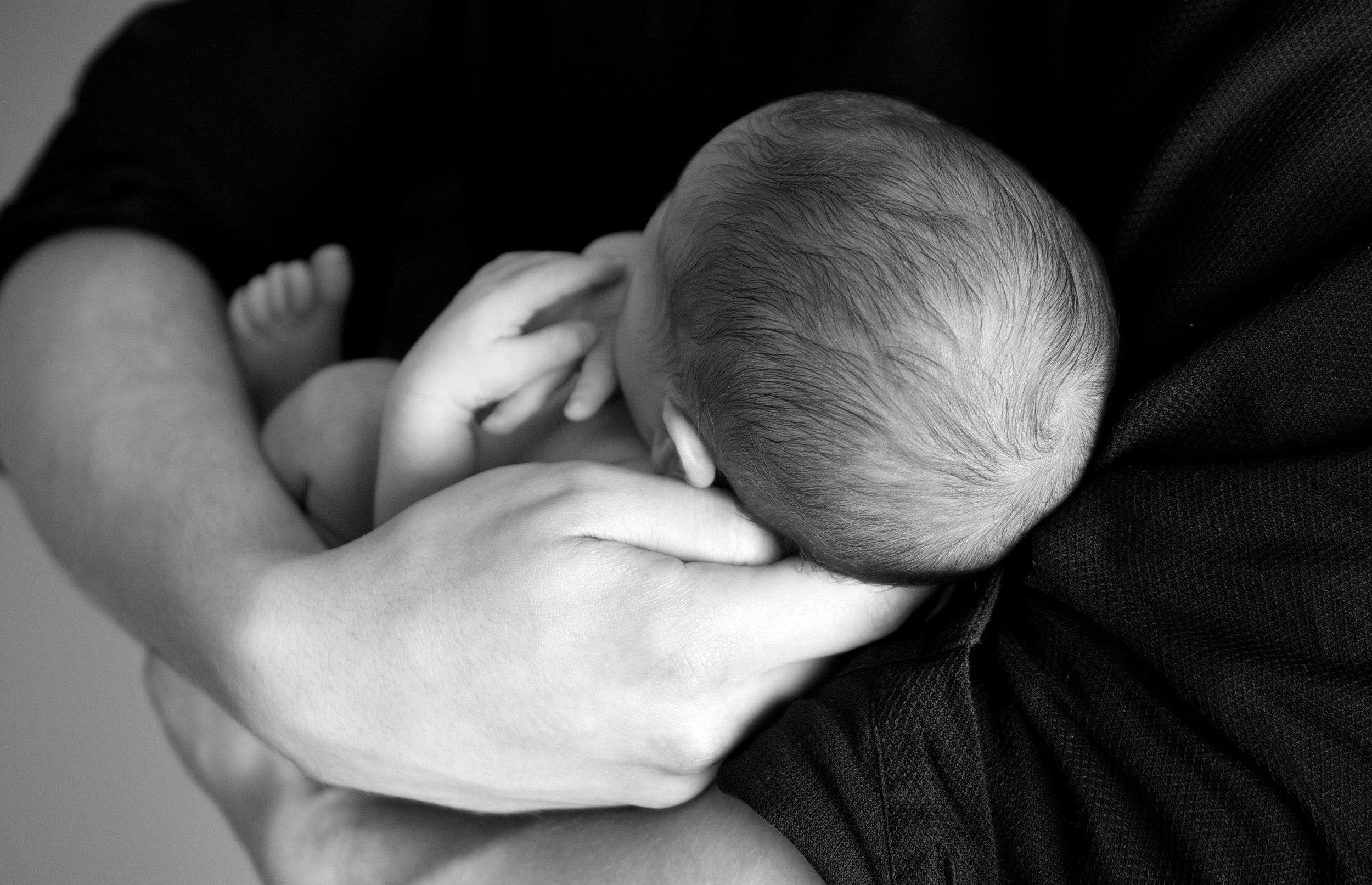
I have an interest in the effects of birth trauma on infant feeding. Cranial Osteopathy is a wonderful tool to assist the post-natal recovery of both mother and infant by unravelling physical strain patterns and also bringing the body into restorative stillness.
These tensions may exist in different tissues, at different depths and in locations distant from the mouth or tongue. They may originate in different ways and at different times. Some relate to the position in the womb, the birth or the post-natal period. Some are directly related to tongue-tie and arise out of the feeding difficulties, frustrations and compensations the tie causes.
Some deeper patterns can relate to genetic or family tendencies or inherited sensitivities.
Cranial Osteopathy facilitates a calmness, stillness and relaxation in the baby and tensions naturally and gently unravel. This method can change the suck, affect the coordination of the feeding, improve the gape and latch as well as the seal onto the breast. In turn this can improve the efficiency of the feeding so that baby is having to expend less energy to get the milk it needs to provide the energy it expends.
Much of the shape shifting - "restitution" or "remoulding" - happens in the first two weeks after birth. One of the greatest gifts you can give your baby is to have birth-related stresses and strains resolved as early as possible.
Ideally, the Osteopath would witness the birth and give treatment immediately. In my practice, this doesn't happen very often but I often see babies in the first few days of life.
Trauma around the birth has long-term effects on health outcomes. Releasing the effects of trauma in the body tissues can remove the associated tissue memory and reduce the chance of future problems.
Treatment is calm, safe and gentle and very low risk. The number of sessions varies according to individual needs, the case history and parental choices.
We aspire to deliver excellent patient-centred care and regularly reflect upon the quality of our service and how it can be improved. We welcome and encourage feedback as a valuable contribution to our learning and improvement processes. Contact me if you’d to feedback.
Please tell the Care Quality Commission about your experience of our service via their website or by telephoning 03000 616161.
Your feedback will always be treated confidentially. The CQC may not respond individually to your feedback but they may contact you for more information if you provide contact details.