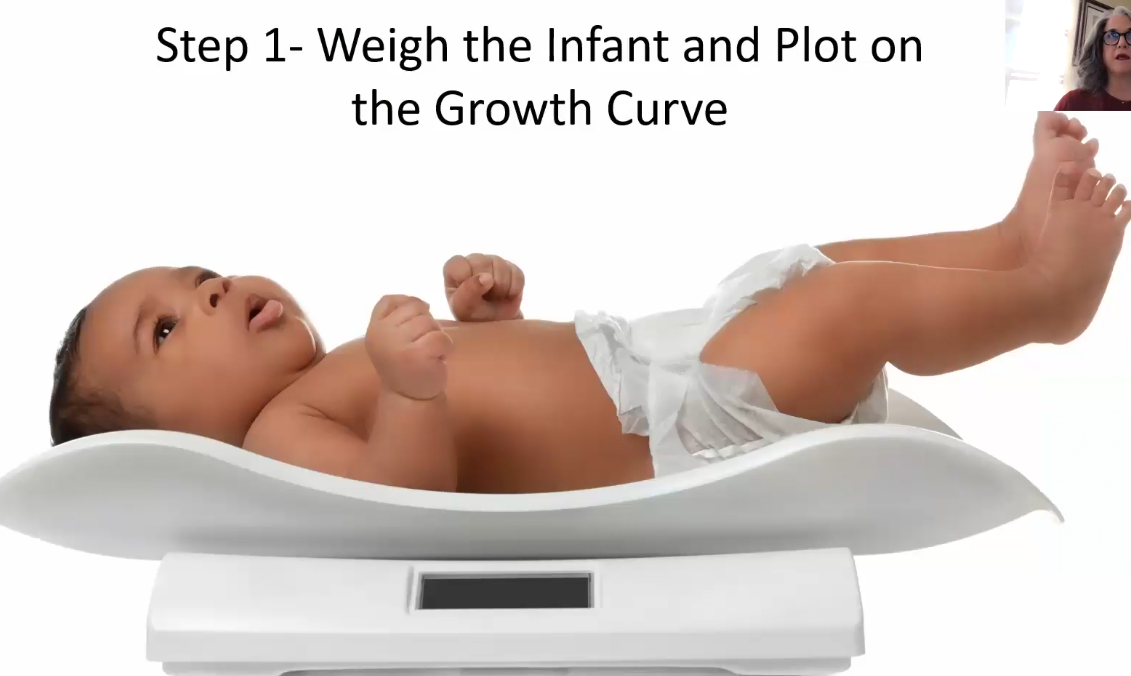
Babies naturally lose weight initially after they are born before their weight starts to increase. This is partly due to fluid loss. Babies are typically expected to be back to their birth weight by 2 weeks of age (around 10–14 days).
The general pattern:
Some initial weight loss in the first few days is normal — usually up to about 5–7% of birth weight for breastfed babies (formula-fed babies often lose a bit less)
Weight loss beyond 8 to 10% is a flag for closer feeding assessment
Weight typically bottoms out around day 3–4, then starts climbing as milk supply increases
Regaining birth weight by day 10–14 is the standard benchmark used by midwives and health visitors in the UK
If a baby hasn't regained birth weight by 2 weeks, it usually prompts a closer look at feeding effectiveness (including depth and comfort of latch, milk transfer, suck/swallow/breathe rhythm, frequency of feeds, tongue-tie assessment, nipple examinatin) rather than immediate concern — though it's a trigger for follow-up rather than something to leave unmonitored.
Unsure how to plot weights? -based on current reviews, the strongest options depend on what you need:
For general parent use — best overall pick:
Child Growth Tracker (iOS/Android) — it records weight, height, and head circumference from birth to age 20, and generates growth charts and percentiles using CDC, WHO, IAP, and a dozen other national standards, plus Fenton gestational-age charts for pre-term babies. Percentiles are calculated using the same LMS method doctors' offices use, so it's clinically credible, not just a parenting toy. There's a paid "Pro" version if you want UK90 charts specifically (useful for UK clients) and an ad-free experience. Cpeg-gcep + 2
If you want something specifically built around WHO + Fenton (preemie) charts:
Tinylog — one of the only baby trackers that includes both WHO growth charts for term babies and Fenton charts for preemies, letting you log weight, length, and head circumference and see percentiles and trends instantly. Google Play
If you're after a free, no-login browser tool (handy for quick checks) :
InfantChart.com — a free calculator using WHO, CDC, Chinese, Down syndrome, and Olsen preterm standards, and it shows both WHO and CDC charts for a given entry, highlighting the AAP-recommended one for the child's age. GrowthchartGrowthchart
For clinician-facing use (matches printed clinic charts exactly):
Growth Chart Plotter (Android, free) — built for paediatricians and GPs to quickly assess a child's growth, plotting on standard percentile charts that match the real printed WHO charts rather than app-generated approximations. Tinylog
Child Growth Tracker (Pro, for UK90 charts) is probably your best all-rounder — UK-relevant standards, Fenton support for any preterm cases, and CSV export if you need to share data with your IBCLC , GP or health visitors.
You may wish to purchase your own scales - just make sure they are clibrated properly. If you do get your own scales try not to weigh baby too often as this can just cause stress which in turn can diminish milk supply